
Quick Summary
Finding a supplier online is easy. Finding one that is real, capable, and honest is the hard part. This guide shows how to find suppliers online through Indian B2B marketplaces, global sourcing platforms, and the offline channels most buyers ignore. It also covers how to separate genuine manufacturers from trading middlemen, and how to verify any Indian supplier free using official government portals before you send a single rupee.
What You'll Learn
- How to find suppliers online through Indian B2B marketplaces, global platforms, and offline channels
- How to tell a genuine manufacturer from a trading middleman before you commit
- How to verify any Indian supplier free using official GST, IEC, MCA, and Udyam portals
Where to Find Suppliers Online
The internet has thousands of places to source from. For Indian buyers, three channels matter most. Domestic B2B marketplaces, global sourcing platforms, and offline networks that never show up in a search bar.
Indian B2B marketplaces
If you are sourcing within India, start with the large domestic directories. They carry manufacturers, wholesalers, and traders across almost every product category.
| Platform | Best for |
|---|---|
| IndiaMART | India's largest B2B directory, widest category coverage |
| TradeIndia | Engineering goods and industrial supplies |
| ExportersIndia | Finding India-based exporters |
| Go4WorldBusiness | Cross-border buyer and seller matching |
| Tradoi | Tradoi Verified Indian sellers; a business cannot list until it passes verification |
Coverage and verification pull against each other. The big directories give you the widest choice, but most let a seller list first and verify later, or not at all, so filtering out fake profiles is your job. On a verified-by-default platform, a business cannot register or make its products public until it clears multi-layer verification, so every supplier you meet there has already cleared that floor. Fewer listings, less noise to filter.
A disclosure, since we would rather you heard it from us. Tradoi is our parent company and Trade in Bharat is its knowledge arm. Tradoi handles no payments and no shipping, and a verified listing tells you a business is real, not that it is good. Use it to build a cleaner shortlist, then run every check in the next two sections anyway.
Global sourcing platforms
If you are importing, the global platforms give access to overseas manufacturers, mostly from China and Southeast Asia.
| Platform | Best for |
|---|---|
| Alibaba | Largest global B2B platform, Asian factories |
| Global Sources | Verified electronics and hardware suppliers |
| Made-in-China | China-focused industrial products |
Use Alibaba's Supplier Location filter to narrow results to a single country. Before importing anything, make sure you hold a valid Import Export Code, which DGFT requires for every commercial import into India.
Beyond the marketplaces
The best suppliers are often not the ones bidding for your attention online. Three underused channels are worth your time.
- Trade fairs and expos like the India International Trade Fair or sector shows such as Auto Expo and the India International Jewellery Show, where you meet manufacturers in person and inspect quality first-hand.
- Industry associations and Export Promotion Councils, which maintain member directories of vetted manufacturers in their sector.
- Referrals from your own network, freight forwarders, and customs brokers, who deal with dozens of suppliers and know who actually delivers.
A sourcing agent can also shortlist and audit factories for you, which is worth the fee for high-value or first-time imports.
Manufacturer or Middleman?
Many suppliers online are trading companies that buy from a factory and resell to you at a markup. Working with a middleman is not always wrong, but you should know which one you are dealing with so you can judge price and quality control fairly.
Signs you are talking to a trader rather than a manufacturer.
- The company name contains words like trading, import-export, or international.
- They offer a huge range of unrelated products no single factory could make.
- They cannot answer detailed questions about production capacity, machinery, or raw materials.
- They refuse a video tour of the factory floor or keep delaying it.
A Surat textile buyer finds a supplier on a B2B portal offering fabric, electronics, and kitchenware on the same profile. No real mill produces all three. A request for a live video call is met with excuses. The profile is a reseller, and the buyer moves on.
A genuine manufacturer will show you the factory, share production capacity, and talk specifics about materials and lead times.
Verify an Indian Supplier with Official Tools
This is where most buyers stop too early. Before you place an order or pay an advance, confirm the supplier is a real, registered business. For Indian suppliers, the government gives you four free verification tools, all available online.
Check the GSTIN
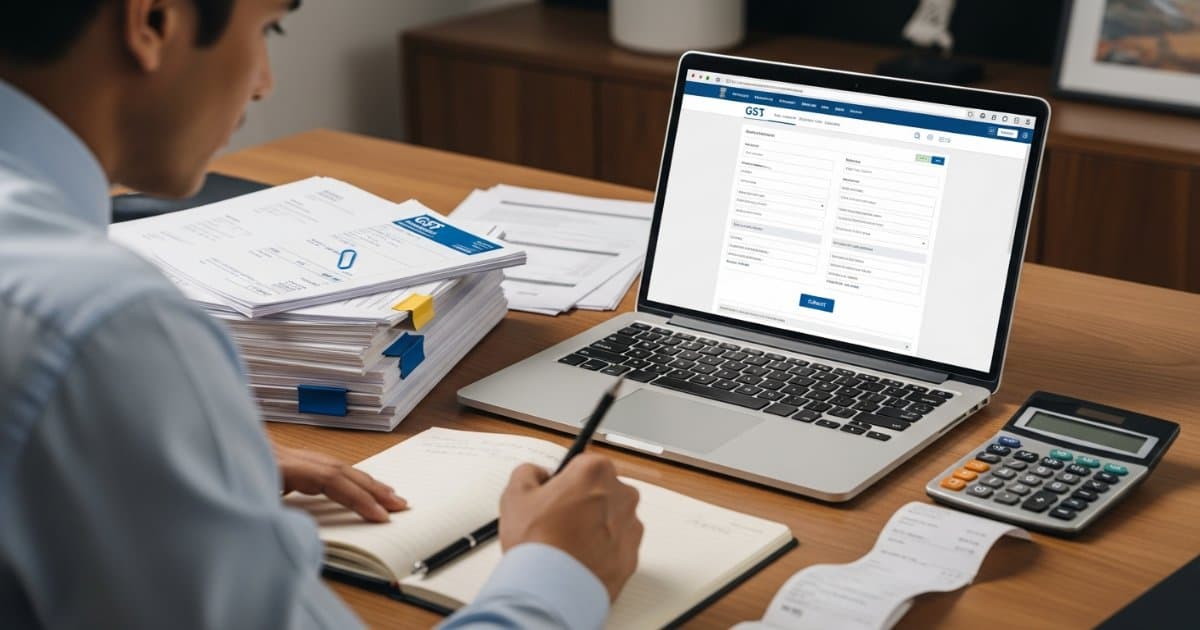
Every registered business has a 15-digit GSTIN. On the GST portal (gst.gov.in), open Search Taxpayer and search by GSTIN/UIN. Without logging in, you can see the legal name, trade name, registration status, taxpayer type, constitution of business, date of registration, and principal place of business.
A Search by PAN option lists every GST registration tied to that PAN. If the status shows anything other than Active, treat it as a warning.
Verify the Import Export Code
If the supplier claims to export, check their IEC on the DGFT portal (dgft.gov.in) using the View Any IEC tool. Enter the IEC number and the firm name to confirm the code is genuine and tied to that business.
Look up company master data
For a private limited company or LLP, use the Ministry of Corporate Affairs portal (mca.gov.in) and the View Company or LLP Master Data service. With the CIN or LLPIN you can see the incorporation date, registered office, directors, and filing status, which tells you whether the company is active and compliant.
Confirm Udyam (MSME) registration
If the supplier markets itself as an MSME, verify the 19-digit Udyam Registration Number, in the format UDYAM-XX-00-0000000, on udyamregistration.gov.in. This confirms a genuine Udyam registration rather than a self-declared label.
- GSTIN shows Active on gst.gov.in Search Taxpayer and the legal name matches
- IEC confirmed on DGFT View Any IEC (if the supplier exports)
- Company or LLP active on MCA master data with directors listed
- Udyam Registration Number verified on udyamregistration.gov.in (if an MSME)
For overseas suppliers the verification steps are different. See our full guide on how to verify a foreign supplier for country-by-country registries and red flags.
Never send an advance payment to a supplier you have not independently verified through an official registry. Platform badges and glossy catalogues are marketing, not proof.
Red Flags That Signal a Risky Supplier
A supplier who uses only a free Gmail or Yahoo address with no company domain, quotes prices far below the market, pushes you to pay the full amount upfront to a personal bank account, or avoids video calls and written contracts is a high fraud risk. Genuine suppliers expect due diligence and welcome it.
A Practical Sourcing Workflow
Finding suppliers online works best as a funnel, not a single search.
- Shortlist five to ten suppliers from marketplaces and offline channels.
- Verify each one using the official tools above and shorten the list to three.
- Request samples and compare quality, not just price.
- Negotiate terms including price, payment milestones, and Incoterms.
- Place a small trial order before committing to bulk volumes.
If you are importing, this is also the moment to think about diversifying beyond a single country. Our guide to the China Plus One shift explains why spreading sourcing across markets lowers your risk.
Frequently Asked Questions
Is IndiaMART or Alibaba safer for finding suppliers?
Neither platform guarantees a supplier is genuine. Both list real manufacturers alongside traders and the occasional bad actor. The platform is only your starting point. Your own verification, samples, and a trial order decide whether a supplier is safe to work with.
Can I find suppliers online for free?
Yes. Browsing IndiaMART, TradeIndia, and Alibaba, and verifying suppliers on the GST, DGFT, MCA, and Udyam portals, costs nothing. You only pay when you buy samples or hire a sourcing agent or inspection service.
How do I know if an online supplier is a real manufacturer?
Ask for a live video tour of the factory, request production capacity and machinery details, and check whether their product range is focused or scattered. A real manufacturer answers these easily. A reseller stalls.
Related Resources
- Supplier Verification Checklist for Importers
- How to Negotiate with Chinese Suppliers
- Sample Request to Supplier Templates
- What is Udyam Registration?
- GST portal Search Taxpayer at gst.gov.in
- DGFT View Any IEC at dgft.gov.in